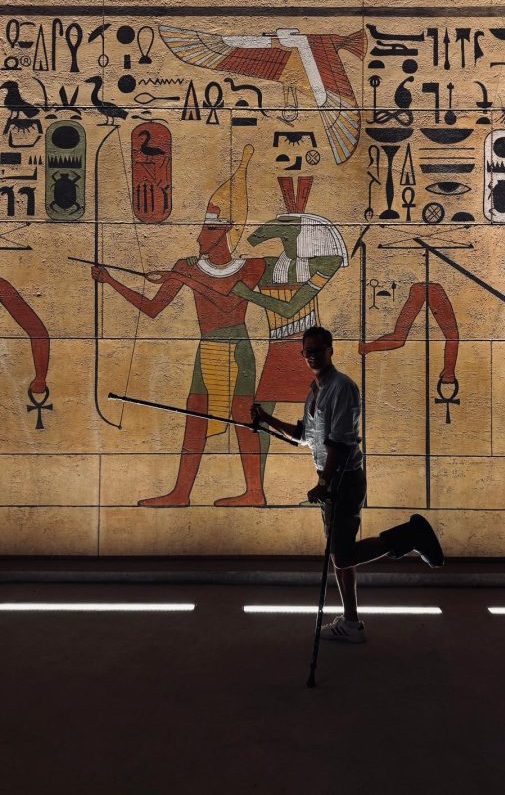
The last few months have probably been the most challenging I’ve gone through since my mid-twenties. I’m still in it, to be honest.
For most of my adult life, no matter what chaos I faced — heartbreaks, setbacks, career curveballs — I always had one thing that kept me together: workout discipline. Relentless, sometimes obsessive, workout discipline.
Running, surfing, biking, fencing, tennis, squash, skiing, skinning — if it made me sweat, I did it. My mornings usually began with a five-mile run, even after a sleepless night. That ritual would rinse away the noise, recharge me, and set my mind straight for the day ahead.
Until this summer.
When Everything Stopped
A stupid fall down the stairs — one of those moments you replay in slow motion — and suddenly everything stopped. I broke my ankle badly enough that I couldn’t put one foot down for weeks. Overnight, my outlet disappeared.
I was alone, struggling with personal upheavals, in pain, unsure what came next. Without movement, my mind began to spiral. I felt trapped — not just physically, but inside my own head.
At some point, after a few dark days, something shifted. Maybe out of stubbornness, maybe out of fear of losing myself. I woke up one day and started reading everything I could about ankle fractures, recovery timelines, nutrition, rehabilitation. It wasn’t exactly inspiring research, but it gave me a sense of control.
Most people, I learned, take twelve weeks to walk again and six months to a year to regain full strength. Not ideal for someone whose sanity depends on movement.
A New Routine
But there was also hope — studies suggesting that a mix of protein, fruits, and vegetables, combined with upper-body workouts, could help accelerate recovery. That was enough for me.
The next morning, I ordered a ridiculous knee scooter online — the kind that makes you look like you’re twelve and reckless — and started what became my new ritual: three miles uphill every morning, ankle elevated, followed by a one-mile crutch “walk” and twenty minutes of upper-body training. Then a protein shake, some fruit, vegetables, and a quiet sense of achievement.
It wasn’t running. Not even close. But something unexpected happened.

The Quiet Return of Wonder
Moving slowly through my neighborhood — at the pace of an injured animal — I began noticing things I’d been running past for years: the morning light shifting across the facades, the chatter of parrots in the trees (yes, parrots — who knew Pasadena had so many?), the squirrels fussing over acorns, the neighbors walking their dogs, the smell of coffee drifting from open windows.
It may sound small, but these moments stitched me back together. They reminded me that there’s another kind of energy — one that doesn’t come from speed or intensity, but from paying attention.
For six weeks, I didn’t miss a day. And today, at week seven, I finally took off the boot and started walking again. I beat the twelve-week mark. I’m still limping a little, but I can feel the rhythm coming back.
Between Grit and Wonder
What this period taught me — or rather, forced me to remember — is that discipline alone isn’t what keeps us alive. It’s our ability to adapt, to reinvent ourselves when things fall apart.
The injury stripped me of my usual rituals, but it also revealed something quieter: the power of curiosity, the small daily wonders that were always there but buried under routine.
In a strange way, this broken ankle became a teacher. It slowed me down enough to notice the world again — the texture of light, the kindness of strangers inquiring about my injury, the sound of my own thoughts when they’re not rushing.
That, I think, is where transformation begins: somewhere between grit and wonder.
And maybe — just maybe — healing isn’t about getting back to where you were, but learning to walk differently through the same streets.
